
Key dates in the history of the Company:
1360 The earliest record of the origins of the Worshipful Company of Upholders dates back to 1360. On 24th February 1360 Robert Gyle, Thomas alte Noket, Peter Warysonn and John of Northampton (Upholders) were elected by the good men of the mystery and were sworn before the Mayor and the Aldermen. The organisation was established.
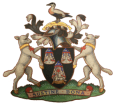
1465 The company received its grant of arms in the reign of Edward IV. The design, incorporating spervers (medieval pavilion tents), was one of the earlier grants to a City company, indicating the prestige and importance attached to the trade.
1480 Legacy bequest of wealthy Upholder John Emlyn to the Company. In his will written in 1774: “I give and bequeth unto my brothern the feolaship of the Craft of Upholder after the decease of me”.
1520 The field of the cloth of gold – the great fire deprived historians of many City records, the nature of the decorations attending the meeting of the Kings of England and France suggests involvement was almost inevitable.
1606 The Upholders invest as shareholders in the Virginia Company, in order to finance the colonisation and development of Virginia in America.
1613 The Upholders Company contributed funds to establish The Plantation of Ulster as part of a City initiative to develop towns, schools and churches.
1626 The first Royal Charter was received, granted by King Charles 1.
1645 Upholders Hall was established, from the proceeds of a gift from Andrew Yardly. The property, Wingfield House, was located close to the site of the current IHQ of the Salvation Army.
1666 The Great Fire of London and destruction of the Hall (yet to be rebuilt).
1668 The second Royal Charter. (The Inspeximus Charter) so called because it was re-confirmed by Charles II after the restoration of the monarchy, based upon the inspection of the records appertaining to the original grant. The fate of the original charter is unclear. Earlier Royal Charters were recalled, prior to being re-issued by Charles II, however, it is unclear whether the original document was confiscated and destroyed, burned in the Great Fire, or survived and was subsequently lost.

1707 The Peter Jackson Charity (The first charity established by the Company, named after its benefactor) was set up to pay pensions to necessitous Upholders.
1901 Award of the Queens South Africa medal
1942 Submarine HMS Upholder and Lt Commander Wanklyn VC, lost in Mediterranean Sea.
1963 Grant of revised Armorial Bearings to the Company, since the original Letters Patent were destroyed.
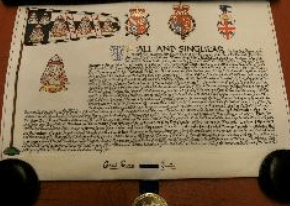
1995 Grant of Heraldic Badge and Pennant to the Company
2026 The Company celebrates the 400th anniversary of the grant of its Royal Charter and celebrates its 666th birthday!
The blend of City and Trades
Like many ancient Livery Companies, members of the Upholders Company comprise a blend of City professionals and the practitioners of its several trades. This has been the case throughout its 666 year history to date. The strength in the organisation arises as a result of the hybrid vigour derived from these two combined skill sets and the resulting synergy.

Historically, both attributes have occasionally been represented in one individual – such as City Sheriff Sir William Rawlins. Aside from being the owner of a major company engaged in all forms of the Upholders crafts, Sir William also founded and was Chairman of the Eagle Insurance Company. The Company flourished independently for a century, then merged to become Eagle Star, which in turn became Allied Dunbar and now Zurich Insurance.
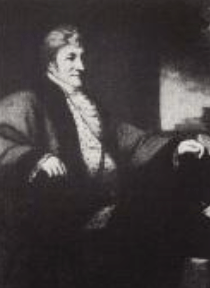
William Hunter was an Upholder and businessman of considerable distinction, becoming Lord Mayor in 1851, the year of the Great Exhibition. The City Art Collection contains an oil portrait of Sir William displayed at Mansion House and the Upholders Company owns a copy of the painting displayed at the City of London School.
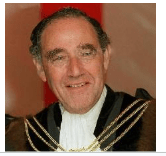
More recently Upholders within the City professions have included several City Alderman and Sheriffs, members of the Greenbury Committee on corporate governance, the Deputy Chairman of Lloyds, Insurance Underwriters, Bankers, Directors of FTSE 100 Companies, High Court Judges, Senior Naval Officers and successful entrepreneurs.
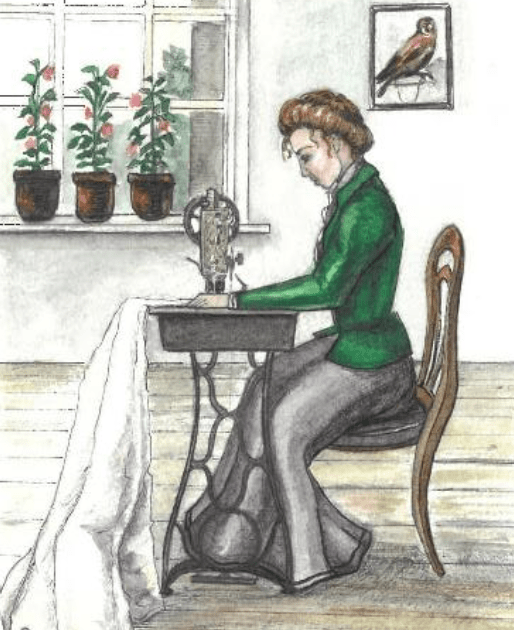
Within the craft arena, Upholders with Royal Warrants have been responsible for organising key elements of state events, including funerals, celebrations and the decoration of royal palaces and historic residences. In moments of grief, triumph or celebration, the hand of an Upholder has played a major role in furnishing the occasion.
The Charters
The 1626 Original Charter
As indicated above, the exact fate of the original 1626 charter document is uncertain; however, a reliable record of its contents does exist, including the exact wording and presentation format. Archivist to the Livery Company, Mr David Ayres suggested that to mark the 400th Anniversary of its grant, it would be highly appropriate to commission an exact replication of the original document. This would not merely be a precise record of the words, but would be completed using the same materials and techniques employed in the original version.
Searching for a suitable organisation capable of undertaking such exacting and unusual work, he discovered that the College of Arms were best qualified to do the job. Their regular commissions in producing exemplifications of Armorial Bearings in the tradition style gave unique access to the range of skills necessary; including historical accuracy, an heraldic artist and a scrivener with perfect hand to write the 7,500 words involved on three sheets of vellum! Even sourcing the extra large size of vellum sheets was a challenge; the work is the first of its kind to recreate a document of such age. Finally, the mounting and framing was completed to showcase the historic recreation to maximum advantage.
The Upholders Company can now look at a key record of its history with pride and appreciate the artistry, skill and dedication of its predecessors, brought back to life after so many years.
The 1668 Inspeximus Charter
Unlike the original 1626 charter, the 1668 charter survives in its original format and is an extremely valuable historic artefact held in the London Archive. Modern photographic and printing techniques have enabled a perfect copy of the original to be produced for display purposes, but to avoid confusion omitting the essential wax seals featured on the genuine item. The wording is very similar to that contained in the 1626 charter.
The History Society
The Upholders History Society, founded by Past Master Jackie Williams, provides a varied programme of events enabling participants to develop a deeper knowledge of London and its institutions, and the part played by Upholders in the history of London. There are normally three or four events a year.
Events have included guided walks of Spitalfields, Middle Temple, Fleet Street and a walk from Trafalgar Square to Berkeley Square. There have also been visits to Leighton House, the Warner Textile Archive, Kelmscott House, the Frederick Parker Collection of Chairs, the Mithraeum, and the Conservation Department at the British Library.


