

The Worshipful Company of Upholders, one of the ancient Livery Companies of the City of London, continues today as a champion of the upholstery and soft furnishings trades. While it no longer regulates the craft as it once did, its role has evolved into one of stewardship—supporting education, awarding excellence, funding bursaries, and promoting high standards across the industry. Through close links with organisations such as the Association of Master Upholsterers and Soft Furnishers and the Guild of Traditional Upholsterers, the Company helps ensure that skills are passed on, innovation is encouraged, and the craft remains relevant in a modern context.

The story of the modern upholsterer begins in medieval London, where the term “Upholder” first appeared. Formally organised as a guild in 1360, the Upholders were responsible for regulating the quality of goods, training apprentices, and protecting both customers and craftsmen. In this period, the work of an Upholder was far broader than a modern upholsterer: an Upholder might make and sell bedding, repair furnishings, act as auctioneer and pawnbroker, supply textiles, and oversee funerary arrangements. Guild authority was significant—members could inspect and seize poorly made goods, ensuring standards across the city. Upholstery at this stage was closely tied to necessity: comfort, warmth, and status were expressed through materials such as feathers, wool, and woven textiles.
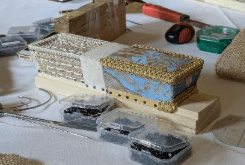
By the 17th and 18th centuries, the Upholder’s role expanded further into what we would now recognise as interior design. Upholders were responsible for coordinating entire interiors—combining furniture, textiles, wall hangings, and decorative schemes. They often worked in partnership with cabinet-makers, forming early versions of the designer-maker collaborations still seen today. This period saw upholstery become more sophisticated, with increased attention to style, proportion, and the decorative arts, reflecting broader social changes and the growing importance of domestic comfort and display.
The Industrial Revolution marked a turning point. Mechanisation and mass production began to erode the dominance of the traditional craftsman. While upholsterers remained essential, their work shifted: factory-made frames and materials became more common, and the role increasingly focused on specialist skills—padding, covering, and finishing—rather than overseeing the entire furnishing process. At the same time, the regulatory power of guilds like the Upholders declined, and their function gradually moved away from trade control towards charitable and ceremonial roles.
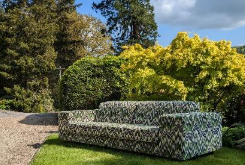
In the 20th century, upholstery diversified again. On one hand, large-scale manufacturing dominated the market; on the other, a renewed appreciation for craftsmanship preserved traditional skills. Upholsterers became both restorers of historic furniture and creators of bespoke, high-quality pieces. The rise of conservation, heritage interiors, and later sustainability has reinforced the value of traditional techniques—hand stitching, natural fillings, and longevity over disposability.
Today, the role of the upholsterer or soft furnisher is more varied than ever. It encompasses traditional craft, contemporary design, conservation, and increasingly, innovation in sustainable materials and processes. While technology has transformed tools and workflows, the core of the trade—understanding materials, structure, and comfort—remains rooted in centuries-old knowledge. The modern upholsterer may work on anything from antique restoration to film and theatre sets, bespoke interiors, or experimental design.
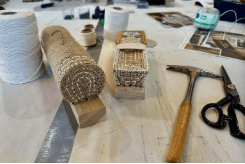
Across these 600 years, the profession has shifted from regulated medieval trade, to influential interior specialist, to a modern hybrid of craft, design, and conservation. What has remained constant is the central idea embodied in the name “Upholder”: to support, to maintain, and to bring both function and beauty to the spaces people live in.

